

The coalition
TLR
The 501(c)(6) advocacy arm — legislative work, coalition-building, and public education on civil-justice reform.
About TLR
Small-business owners and homemakers. Plant managers and physicians. Lawyers who want the system fair. Ranchers, teachers, nurses, consumers. One statewide coalition for fair Texas courts.
Supporter, city, and profession counts are TLR membership figures, current as of 2025.
How TLR is organized
TLR's advocacy, research, and amicus work operate independently, with separate reporting and separate books.
The coalition
The 501(c)(6) advocacy arm — legislative work, coalition-building, and public education on civil-justice reform.
Research & education
The 501(c)(3) research foundation — data, reports, and educational programs on how civil justice shapes the Texas economy.
In the courts
Friend-of-the-court briefs filed in appellate cases where the meaning of Texas reform law is on the line.
A brief history —
1970s — 1980s
Texas had a national reputation for lawsuit abuse. The Wall Street Journal called it the "Lawsuit Capital of the World," and 60 Minutes asked whether justice was for sale here. Insurers and employers priced Texas litigation risk into the cost of doing business in the state.
1994
Dick Trabulsi, Dick Weekley, Leo Linbeck and Hugh Rice Kelly founded TLR. In the 1995 session that followed, the Legislature passed eight major civil-justice reform bills.
1995 — Today
We've helped pass reforms in nearly every session since. Texas added more than 35,000 licensed physicians between 2003 and 2023, faster than a population that grew from roughly 22 million to 30 million (Texas Medical Board new licensee data). The work continues every session.
TLR has helped build support for major civil justice reforms and carry that support through the Texas Legislature.
The individual measures have changed over time. The objective has remained consistent: a legal system that is fair, predictable, and accountable. These photographs record part of that history — bills signed, relationships built over time, and the Texans who carried the work from one session to the next.
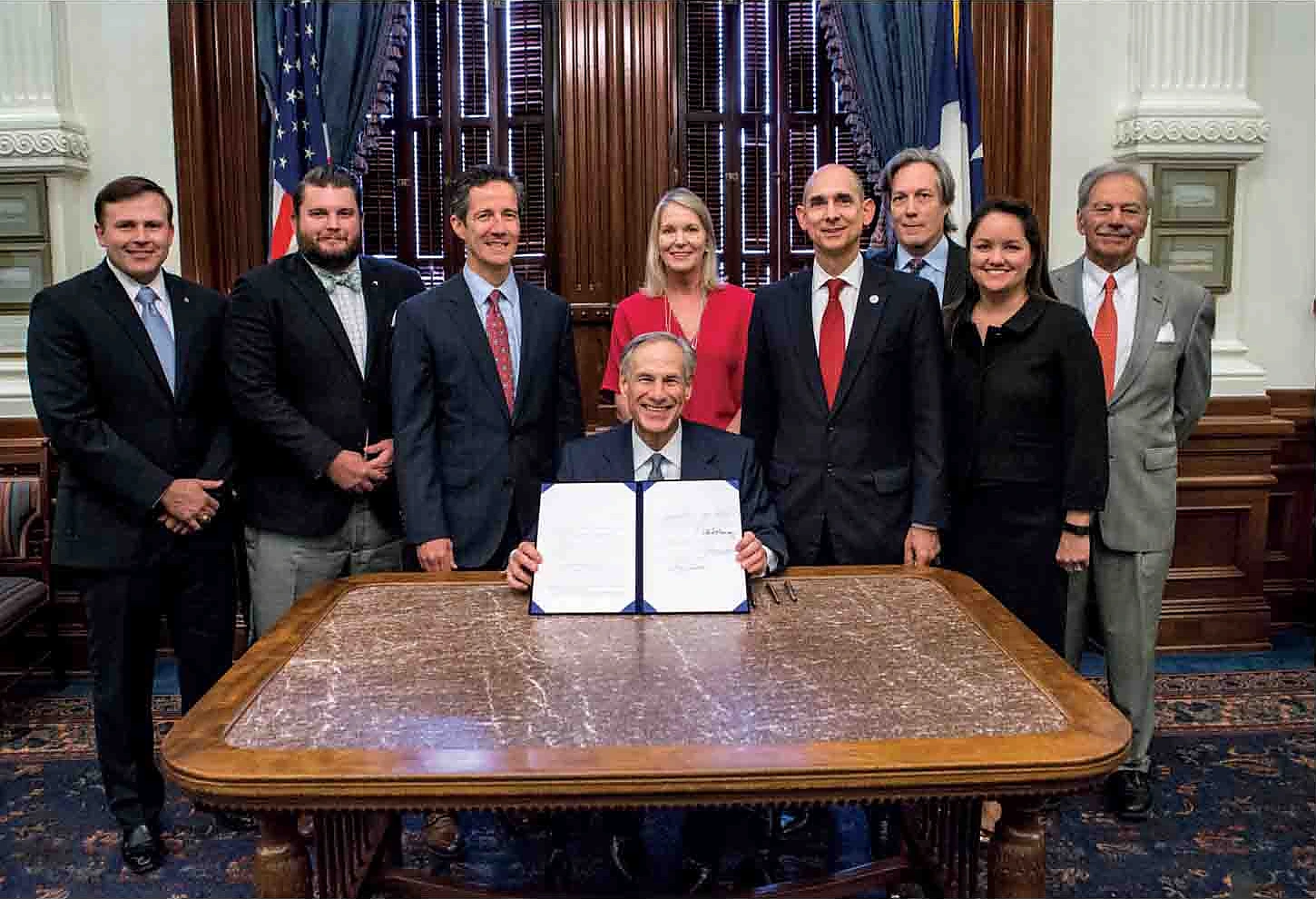


Lawsuit abuse does not stand still. TLR continues to study emerging problems, make the case for reform and work with Texans who want the civil justice system to function as it should.
That is how TLR is organized. Here is what TLR is working on today.
